Valletta | Malta
Valletta is not loud luxury.
It is layered luxury, carved in limestone, softened by sea air, and structured by centuries of design.
Unlike other European capitals shaped by layers of excess, Valletta feels edited. Compact yet commanding, it offers cultural density without sprawl. The Mediterranean is always visible, always present. There is no separation between city and sea, only elevation and light.
It stands apart because it does not attempt to compete. Valletta is neither theatrical like Rome nor polished like Paris. It is intellectual, architectural, maritime. A capital scaled for walking and observation.
Where to Stay in Valletta
The Phoenicia Malta
Positioned just beyond Valletta’s City Gate, The Phoenicia Malta carries the composure of a grand European hotel, the kind built for arrivals. Its façade is symmetrical and assured, opening into interiors that prioritize proportion, natural light, and quiet formality.
What distinguishes the property is scale. Private gardens descend in structured terraces toward the harbor, softening the fortified edge of the city. An infinity pool is carved directly into the bastion walls, a contemporary intervention that feels architecturally integrated rather than imposed. From this vantage point, Valletta’s skyline reads as a continuous band of limestone rising above the water.
The interiors lean classic rather than experimental, and that is precisely the point. Marble floors, restrained upholstery, and traditional detailing reinforce a sense of continuity. This is legacy hospitality, polished, assured, unfussy. Service operates with discretion, never theatrical. The experience is less about novelty and more about continuity: a property that understands its role as both threshold and retreat.
For travelers who appreciate heritage without heaviness, The Phoenicia offers something increasingly rare, expansiveness at the edge of a fortified capital, without sacrificing proximity to its rhythm.
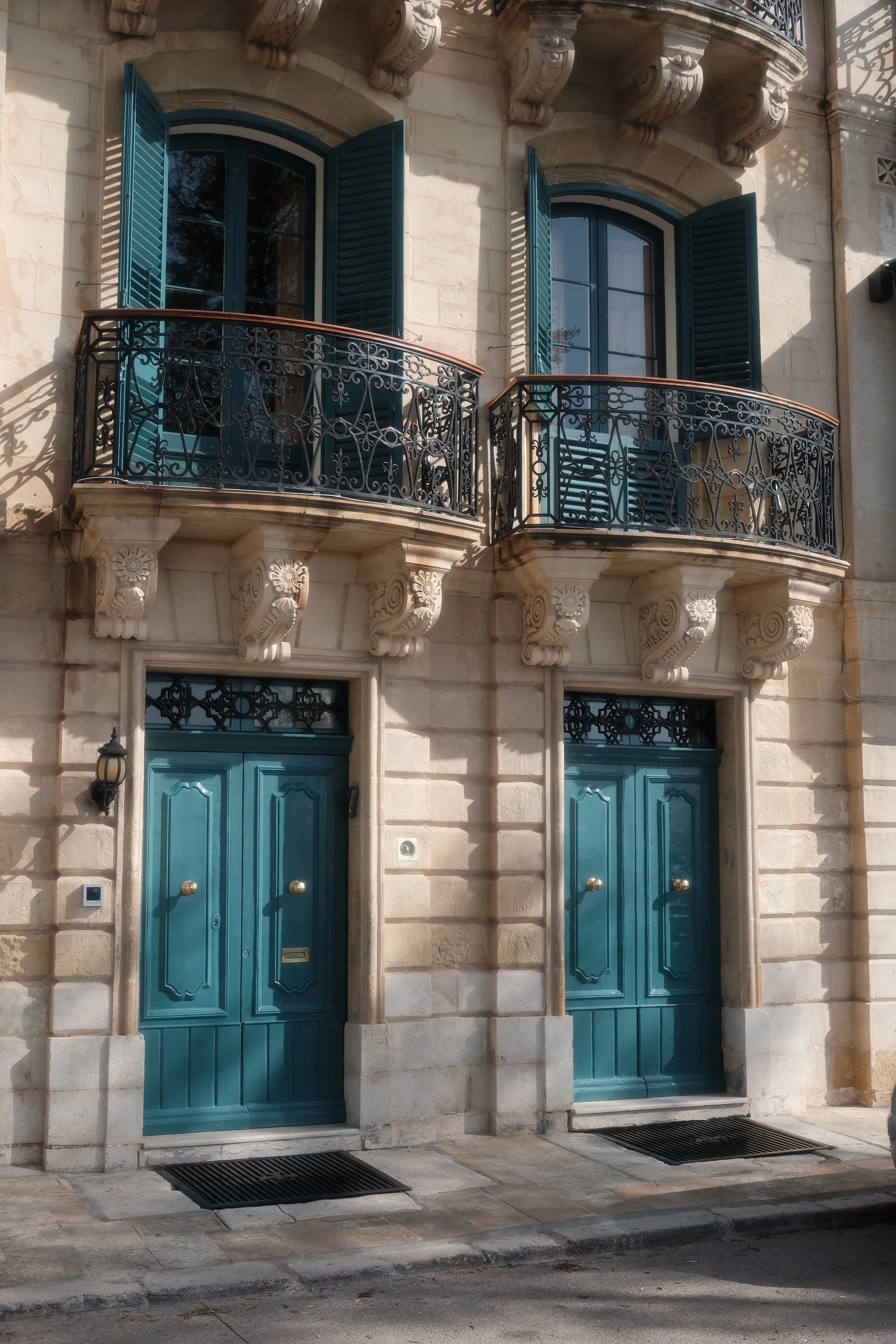
Iniala Harbour House -
Iniala Harbour House
Iniala is layered into the Grand Harbour itself, a collection of restored Maltese townhouses and contemporary spaces stitched together with precision.
Interiors feel curated rather than decorated. Natural stone, glass, and bespoke furnishings balance history with modern restraint. Many rooms open directly toward the water, where the harbour becomes part of the experience.
Service here is deliberate and polished. It feels private. Considered. As though every detail has been measured before arrival.
If The Phoenicia is heritage, Iniala is refinement. It suits travelers drawn to architectural contrast, those who want history framed through a contemporary lens.
Rosselli – AX Privilege
Rosselli AX Privilege is refined and contemporary, set within a 17th-century townhouse along one of Valletta’s narrower streets. From the exterior, it remains architecturally faithful to the city, limestone façade, restrained openings, proportioned symmetry. Inside, however, the mood shifts. The palette deepens. Charcoal, bronze, and smoked glass temper the Mediterranean light, creating interiors that feel controlled and intentional.
The contrast is deliberate. Where Valletta’s streets are sun-washed and luminous, Rosselli leans inward, quieter, more atmospheric. Rooms are composed rather than decorative, with clean lines and tactile materials that emphasize comfort without excess. Lighting is soft and architectural, designed to frame the space rather than dominate it.
A rooftop plunge pool introduces a private counterpoint to the city below. Elevated above the grid, it offers a moment of seclusion, particularly valuable in the warmer months when Valletta’s stone absorbs the heat of the day. The scale remains boutique, but the service is exacting. Every detail, from layout to pacing, feels considered.
Rosselli suits the traveler who appreciates restraint. It does not attempt grandeur; it refines the idea of it. Deliberate, controlled, and confidently understated, it shapes a stay through precision rather than spectacle.
Where to Dine
Legligin Restaurant
Legligin is not built for volume. It is built for depth.
There is no traditional menu placed in front of you. Instead, a curated sequence of Maltese dishes arrives course by course, seasonal, regional, and rooted in tradition. You relinquish control and allow the experience to unfold.
The space itself is carved into Valletta’s stone architecture. Arched ceilings. Dim light. Close tables. Conversation stays low, intimate. There’s an honesty to it, nothing overly styled, nothing theatrical.
Dishes feel grounded in Maltese heritage, slow-cooked meats, local vegetables, robust flavors that reflect the island’s Mediterranean layering of influence. It feels less like dining out and more like being welcomed into something established.
This is where you go to understand Malta through food.
For Harbour Light
& Pause
Barrakka Kiosk
Walking along the edges of the Grand Harbour recalibrates scale. The bastions descend with engineered precision into deep blue water, an abrupt meeting of fortress and sea. Across the inlet, the historic Three Cities echo Valletta’s stone geometry in quieter formation, their domes and defensive walls extending the architectural dialogue. The perimeter reveals the city’s original intent — not ornament, but authority, and the Mediterranean feels expansive yet carefully framed.
The Upper Barrakka Gardens provide one of the most composed vantage points in the capital. Evenly spaced colonnades structure the harbor view into measured intervals, reinforcing the city’s sense of order. Ships pass below with quiet regularity, while the limestone shifts in tone as the light changes throughout the day. Despite its prominence, the atmosphere remains restrained, a place to observe proportion, elevation, and horizon rather than simply photograph them.
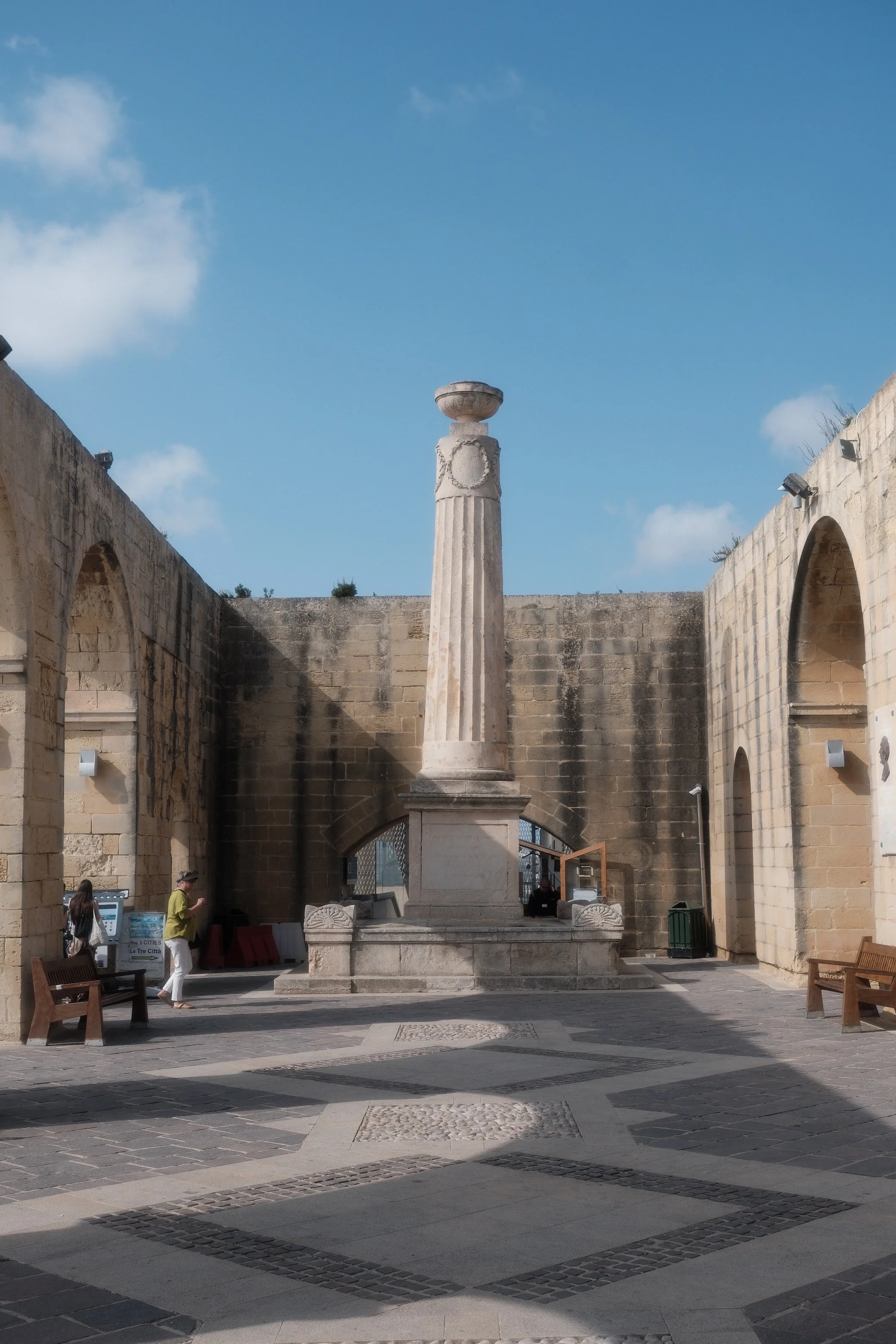
Upper Barrackka Gardens
Where the City Holds Its Shape
Valletta is best experienced through alignment, where you stay, where you pause for coffee, where you position yourself at sunset. It is a city that reveals itself through structure and light rather than spectacle. The experience is cumulative, built from vantage points and considered choices rather than a checklist of attractions.
For the discerning traveler, Valletta offers something increasingly rare in Europe: cohesion. Architecture, hospitality, dining, and landscape exist in quiet dialogue with one another. Nothing feels excessive; nothing feels accidental. The scale remains human, the materials honest, the atmosphere composed.
To spend time here is to appreciate proportion, in design, in pace, in atmosphere. Valletta does not overwhelm. It refines, and in doing so, leaves a lasting impression defined not by volume, but by clarity.
